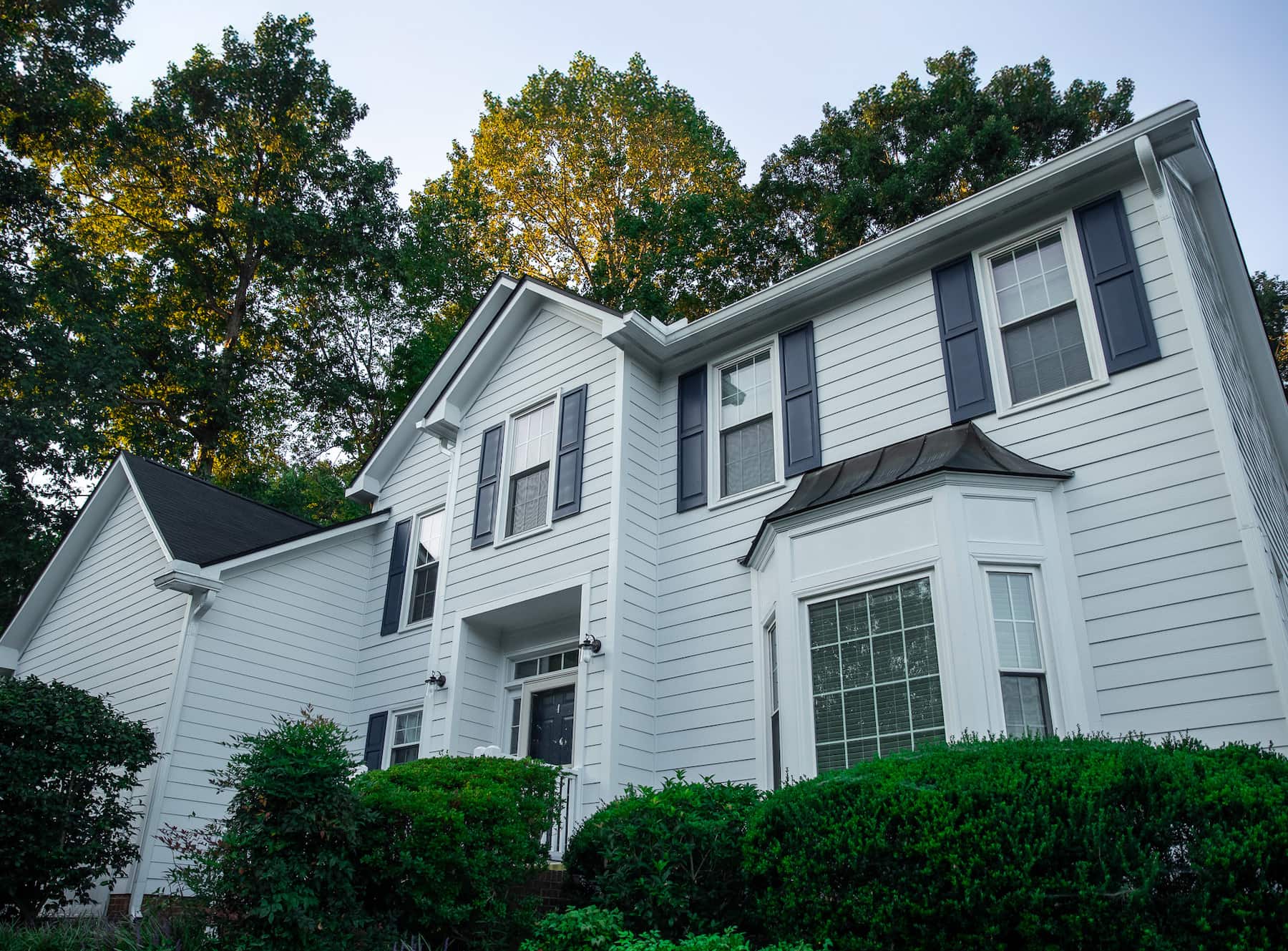
How James Hardie Siding Stands Up to Pests
June 22, 2026
Brick and Hardie siding can give a home an exterior with depth, warmth, and a clear architectural identity. The challenge is making the materials feel connected. A beautiful brick paired with the wrong siding color can look accidental, while a thoughtful combination can bring an older house into focus.
Successful combinations depend on four decisions: the colors already present in the masonry, the siding profile, the amount of each material, and the location of the transitions. Work through those decisions in that order, and the project becomes easier to manage.
At Carolina Exteriors, we help Triangle-area homeowners plan exterior updates with in-house design support and siding replacement services. Here, we explain how to coordinate existing brick with new siding, from your first color samples to the finished material transitions.
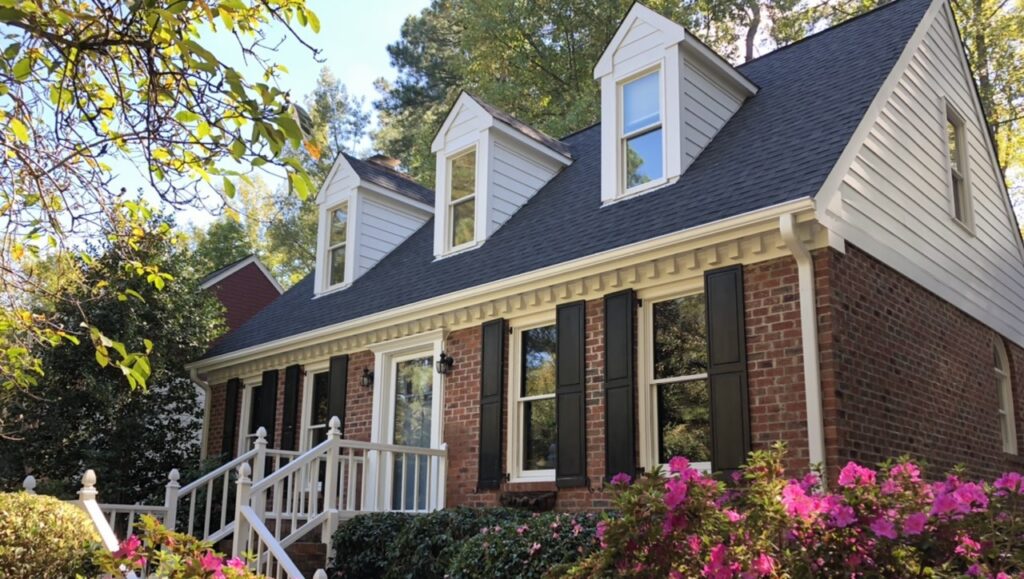
Hardie siding is James Hardie’s brand of fiber cement siding. Its product range includes horizontal lap siding, panels, and shingle styles, allowing different visual relationships with brick.
Brick supplies a textured surface with natural variation. Siding introduces a more regular pattern and another color field. Together, they offer ways to emphasize an entrance, distinguish an upper story, or connect a newer addition to the original house.
For renovations, begin by identifying what you want to preserve. Existing brick may provide the character you like, while replacement siding offers an opportunity to reshape the surrounding palette.
Use these combinations to create a shortlist, then verify them with physical samples.
| Brick appearance | Siding directions | Detail to check |
| Red or red-brown | Warm white, taupe, muted blue | Relationship with the roof |
| Orange or terracotta | Cream, warm greige, olive | Strength of the warm undertones |
| Brown | Ivory, mushroom, light taupe | Mortar and darker brick variations |
| Tan or buff | Off-white, muted green, navy | Contrast across large wall areas |
| Gray | Slate blue, off-white, charcoal | Warm or cool cast of the masonry |
| White or cream | Deep green, navy, warm gray | Prominence of darker siding sections |
| Black or charcoal | Warm white, light greige, muted sage | Contrast with siding and mortar |
For white brick, compare a darker siding accent with a softer gray or neutral option. For black brick, test lighter siding to see how strongly you want the materials to contrast. In both cases, include the mortar and roof in the comparison. Research which brick and fiber cement combinations work best for you.
Avoid selecting trim independently. Bring a trim sample into the comparison as soon as you narrow the siding options.
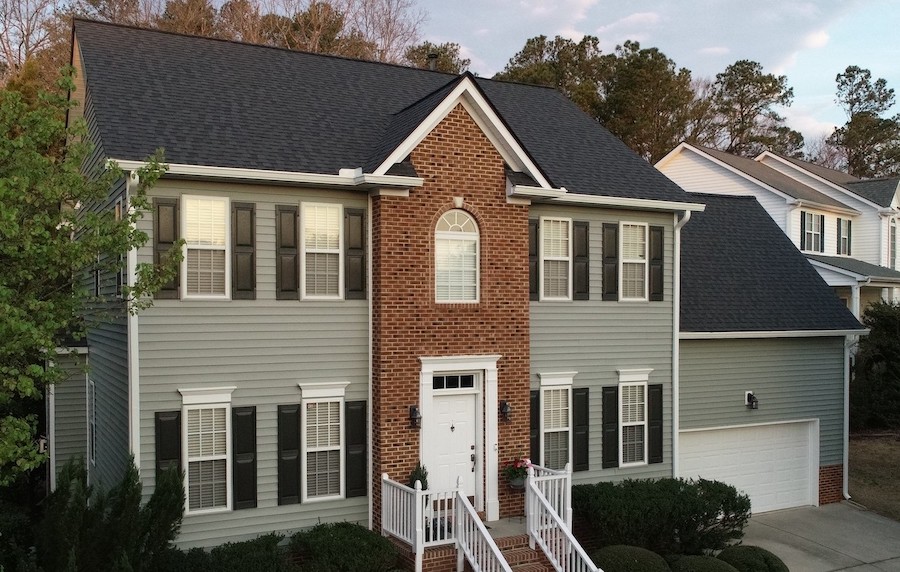

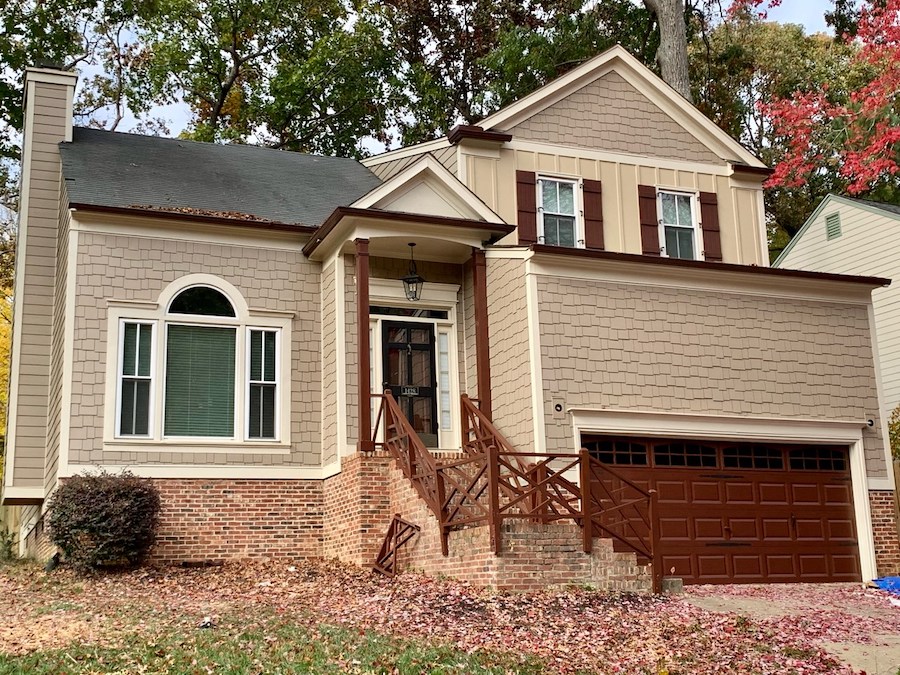
Brick contains more color information than its broad label suggests. “Red brick” may include brown edges, gray flecks, and cream mortar. Those details can guide your siding selection. We recommend looking at those details before narrowing your siding choices.
Up close, identify the dominant brick color, secondary tones, and mortar shade. From the street, assess the overall impression. A siding sample should work with both views. Matching an isolated fleck is less useful if the resulting color feels disconnected from the whole wall.
If a siding sample looks wrong next to your brick, check two things:
Change one thing at a time so you can tell what improves the match.
Mortar can provide a connection between masonry and siding, especially when its color remains visible from the street. Use it as a reference point rather than an exact matching requirement. A large siding surface may read differently from narrow mortar joints.
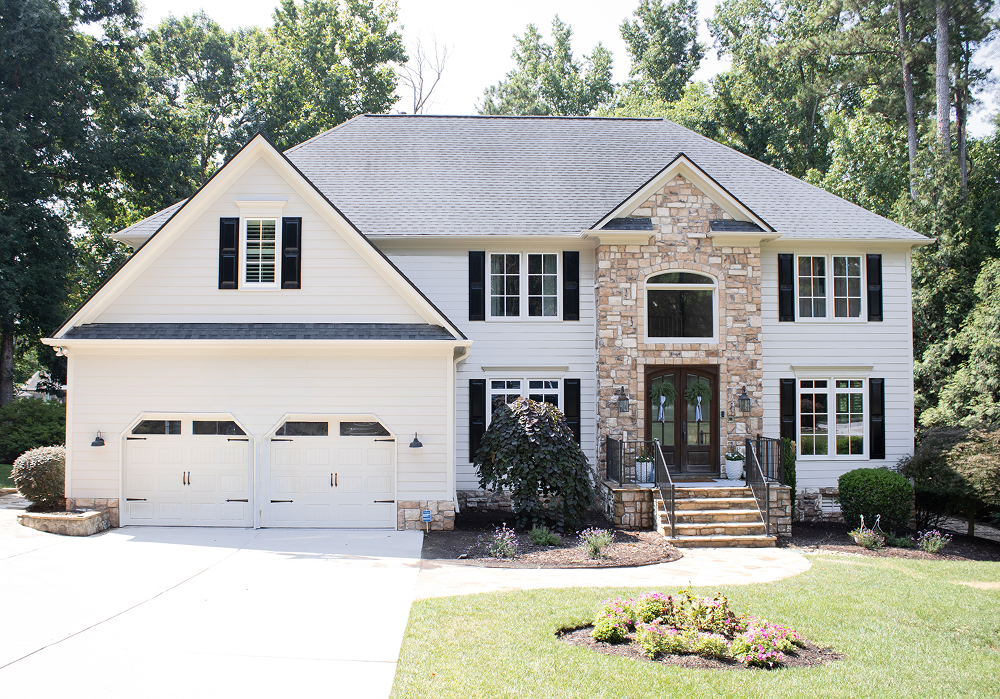
For a mixed-material exterior, a roughly 60/40 split for brick or hardie siding is one composition worth testing. It gives one material the lead while leaving substantial space for the second. We treat this as a design starting point, not a guarantee that it will suit every house.
For a siding-led design, brick might define a prominent entry or lower wall section. For a brick-led design, siding might distinguish upper walls or a substantial gable.
Sketch an approximate 60/40 arrangement on a photograph. Judge whether each material has a clear purpose before refining the boundaries.
Coverage alone does not determine prominence. A smaller dark siding area can attract more attention than a larger light brick area.
Compare the material split and palette together. If one section feels overpowering, try changing its color depth before changing its size.
Existing masonry, windows, rooflines, and wall projections may make another proportion more convincing. A mostly brick home may only need siding accents. A mostly sided home may benefit from a focused masonry feature. Keep the architecture as the deciding factor.
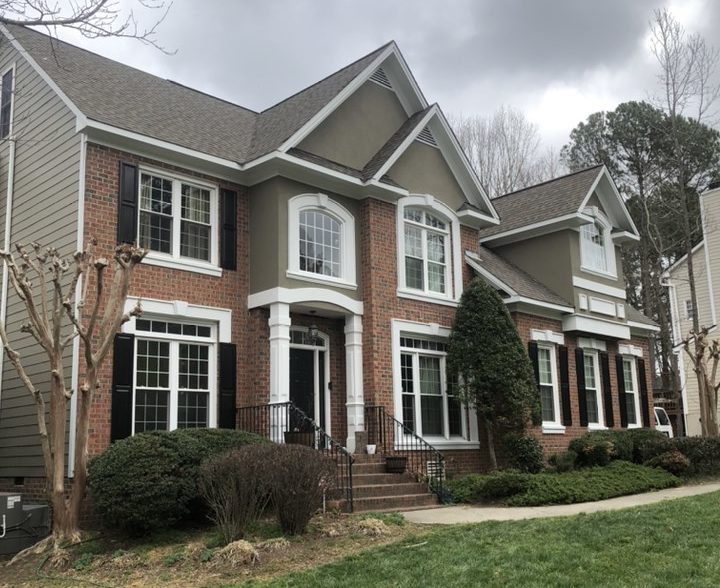
Start with one primary siding profile. Add another only when it helps define a particular architectural feature. Browse our James Hardie siding projects for examples of completed exterior updates.
A home’s age offers clues, but brick varies by region, supplier, and renovation history. At Carolina Exteriors, we recommend using the construction era as background while letting the actual brick color, texture, and mortar guide your siding selection.
| Home era | Brick colors to look for | Siding options to explore | What to consider |
| 1970s: Strong Warmth | Orange-red, rust, earthy brown | Cream, mushroom, muted olive | Compare warm and cool samples to see how each affects the brick’s orange tones. |
| 1980s: Traditional Red | Red with orange, brown, or burgundy undertones | Warm white, muted blue, navy | Warm white creates a lighter palette; blue or navy adds contrast. Include the roof in your comparison. |
| 1990s: Deeper Blends | Dark mixtures containing brown, burgundy, gray, or lighter flecks | Light neutrals and medium-toned colors | Compare lighter and medium shades to determine how much contrast suits the house. |
| Contemporary Homes: Light Neutrals | White, cream, pale gray | Charcoal, deeper colors, related light neutrals | Preview dark and light options across the full elevation to assess their visual impact. |
The visible boundary between brick and siding also needs a construction detail appropriate to the wall assembly.
James Hardie provides installation resources addressing masonry intersections, brick sills, and flashing. Your installer should use the current guidance applicable to the specified product and condition.
Before installation, discuss flashing, water-management connections, required clearances, and sealant locations. Ask whether existing masonry or underlying wall areas need repair.
Review the appearance of visible trim and flashing at the same time. The construction plan and design should support each other.
A cohesive exterior comes from connecting color, pattern, proportion, and placement.
If you live in the Raleigh area of North Carolina, our team at Carolina Exteriors help you compare siding colors, materials, and styles as you plan your exterior update.
Begin with warm white, taupe, muted blue, or navy samples. Compare them against your particular brick, mortar, and roof.
No. Use it to explore a lead-and-support relationship, then adjust the coverage to suit the architecture.
Yes. Give each profile a defined location and purpose, and review whether the extra pattern improves the exterior.
Test replacement siding and coordinated trim with the existing masonry before deciding whether a brick finish change belongs in the project.
Explore charcoal, navy, or deep green for contrast, or warm gray and off-white for a softer look. Compare samples beside the brick, mortar, and roof before choosing.
Warm white, light greige, and muted sage are options to test. Lighter siding can balance the darker masonry, while the mortar color can help connect the two materials.
Get a free, no obligation estimate.
Financing Available

Speak with one of our experience team members who can help you make the best decisions for your home. Give us a call at (984) 279-1776 or request a consultation below.
No obligation • Financing available

Carolina Exteriors is the Raleigh area’s most recommended and referred specialty replacement contracting company. Boasting an impressive 60% referral and repeat customer rate, we are the trusted professionals for James Hardie® HardiePlank siding, replacement windows, entry doors, roofing, and gutters.
© 2025 Carolina Exteriors. Sitemap Privacy Policy
Site by HipBip.co