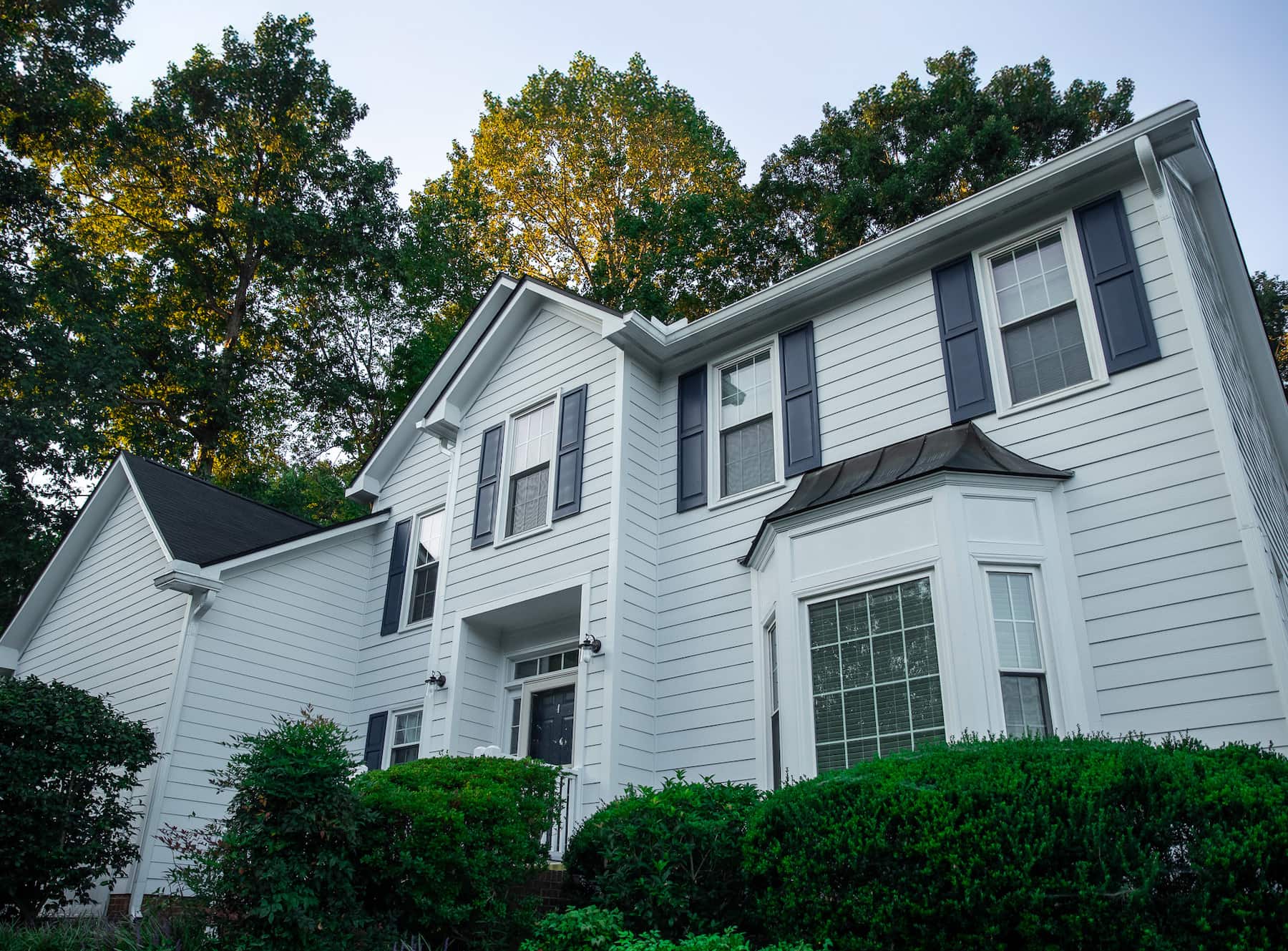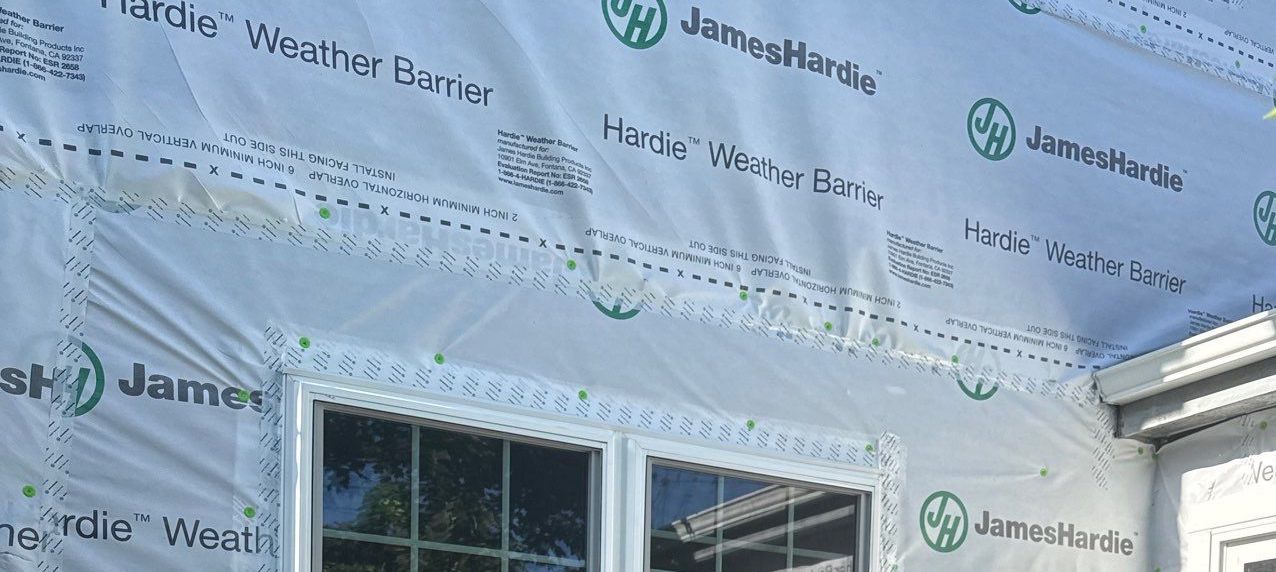
James Hardie Weather Proof Wrap – The Ultimate Weather Barrier
April 17, 2026
Your siding does more than set the color of your home. Its direction, texture, and proportions help define the entire exterior. Board and batten creates vertical lines with raised details, while lap siding introduces a familiar horizontal pattern.
Both styles can complement Raleigh-area homes, from traditional houses with broad front porches to contemporary designs with prominent gables. You can choose one style throughout or combine them to highlight architectural features.
At Carolina Exteriors, we help homeowners connect their design preferences with practical siding choices. Here’s what to consider when comparing board and batten vs. lap siding, including appearance, installation, maintenance, and cost.
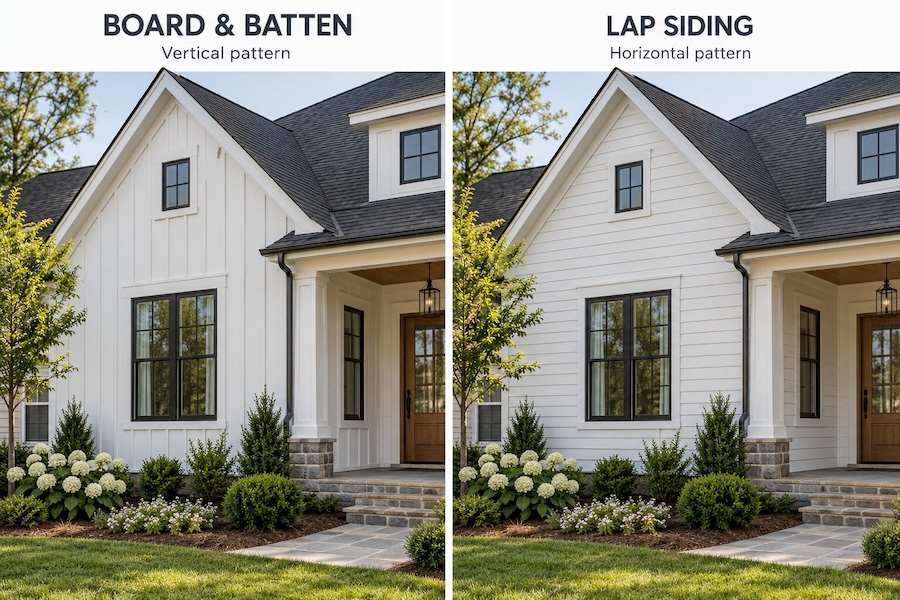
Board and batten siding traditionally uses wide vertical boards with narrow strips, called battens, covering the joints between them. The raised battens create depth and a repeating pattern of vertical shadows.
Modern systems achieve this appearance in different ways. Some use individual boards and separate battens. Others combine larger siding panels with applied trim or incorporate the pattern into manufactured profiles.
With James Hardie fiber cement products, vertical panels and compatible batten trim can create this distinctive exterior. Our guide to James Hardie siding options explains how different products contribute to the finished look.
Board and batten is closely associated with farmhouses, but it also works with cottages and contemporary architecture. Wider spacing creates larger uninterrupted surfaces, while closer spacing produces a more frequent pattern.
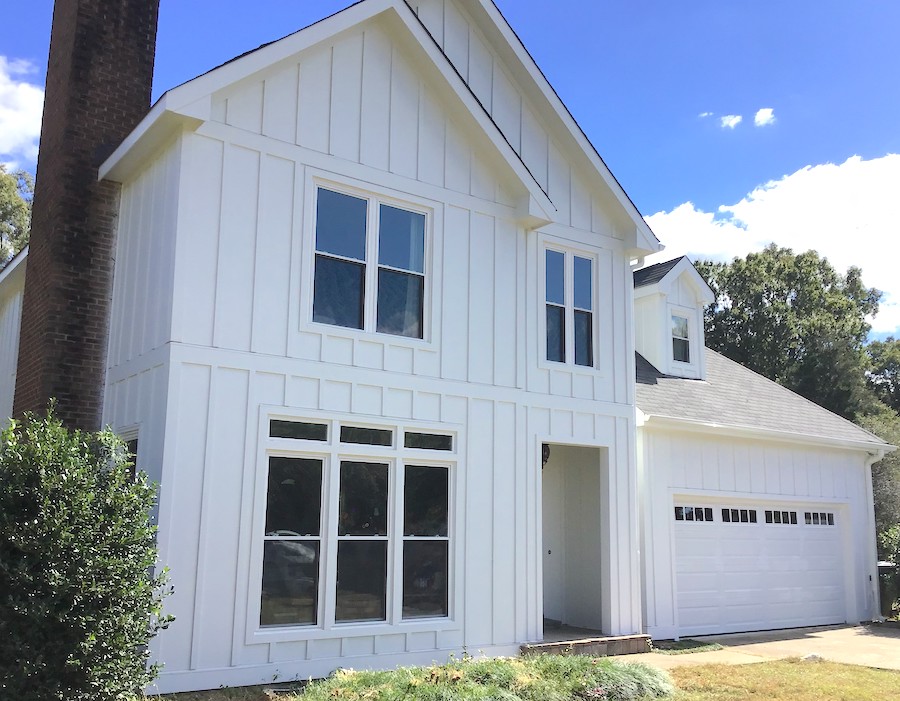
Lap siding features horizontal courses that overlap the course below. This arrangement creates the familiar horizontal lines seen on many traditional homes.
Depending on the product, lap siding may consist of individual overlapping boards or manufactured profiles that reproduce that appearance. Materials include wood, vinyl, fiber cement, and engineered wood.
Lap siding can feel traditional or contemporary depending on its texture, color, profile, and trim. Its horizontal lines can emphasize width and visually connect broad wall areas.
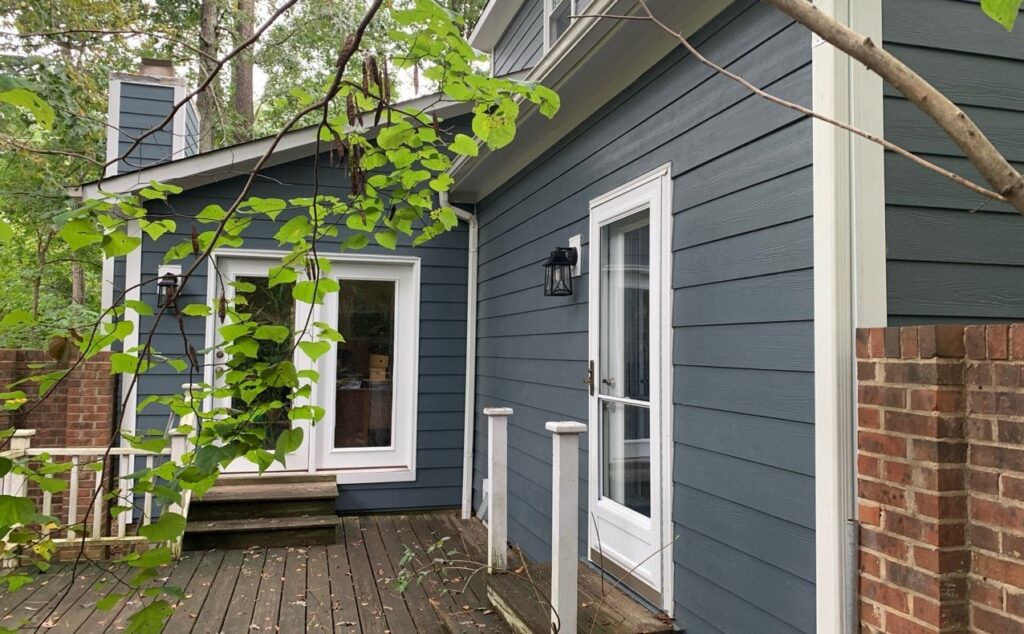
Orientation is the clearest difference, but the choice also influences layout, visual proportions, and installation details.
| Feature | Board and batten | Lap siding |
| Main pattern | Vertical boards or panels with raised battens | Horizontal overlapping courses or profiles |
| Visual emphasis | Height and vertical features | Width and horizontal features |
| Key design choices | Batten width, spacing, and placement | Course exposure, profile, and alignment |
| Common applications | Whole houses, gables, entries, and accents | Whole houses and broad wall areas |
| Installation considerations | Panel layout, batten placement, and trim | Course alignment, overlaps, and joints |
Board and batten introduces pronounced vertical details. Lap siding creates horizontal rhythm that can complement long rooflines and front porches.
Neither belongs exclusively to one architectural style. The best choice depends on the house’s proportions and the other materials already present. For example, vertical siding can highlight a front-facing gable, while horizontal siding connects the wider walls beneath it.
Board and batten and lap siding describe styles, not materials. Maintenance depends heavily on the actual product and finish you select.
Wood, vinyl, and fiber cement have different care requirements, even when they share a similar appearance. Compare cleaning instructions, finish maintenance, repair procedures, and warranty conditions.
Our comparison of vinyl siding and James Hardie fiber cement siding can help you evaluate material choices separately from orientation.
Board and batten requires careful planning around windows, doors, corners, and narrow wall sections. Systems with separate battens also involve additional placement and fastening steps.
Lap siding requires consistent courses and appropriate treatment of overlaps, joints, and openings.
Both need proper preparation, flashing, fastening, and clearances. Direction alone does not determine weather resistance. Our guide to common James Hardie installation mistakes explains why installation details deserve attention alongside appearance.
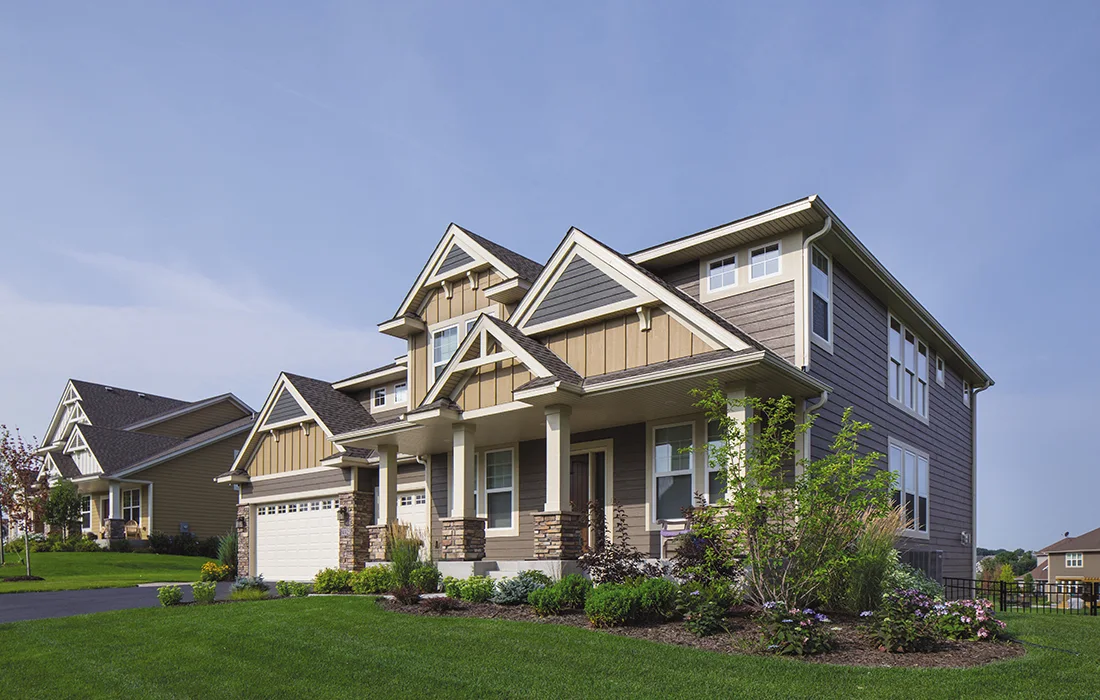
You do not have to choose one pattern for your entire home. Combining board and batten with lap siding can add interest while giving different architectural sections a clear identity.
One approach uses lap siding across the main walls and board and batten on selected gables or entry areas. Horizontal siding establishes continuity, while the vertical sections become focal points.
Place transitions where the house provides a logical boundary: a corner, a change in wall depth, or a defined upper-story section.
Switching patterns halfway across an uninterrupted wall can look arbitrary. An elevation drawing helps show whether the proposed transitions support the overall design.
Using the same color for both styles lets texture provide the contrast. Different colors create a stronger distinction and should work with the roof, windows, masonry, and trim.
Consistent window and corner trim can help connect the patterns. If you want additional inspiration, explore our guide to mixed siding exterior design.
We also recommend reviewing construction details at each transition. Differences in thickness, flashing, and trim need attention before installation begins.
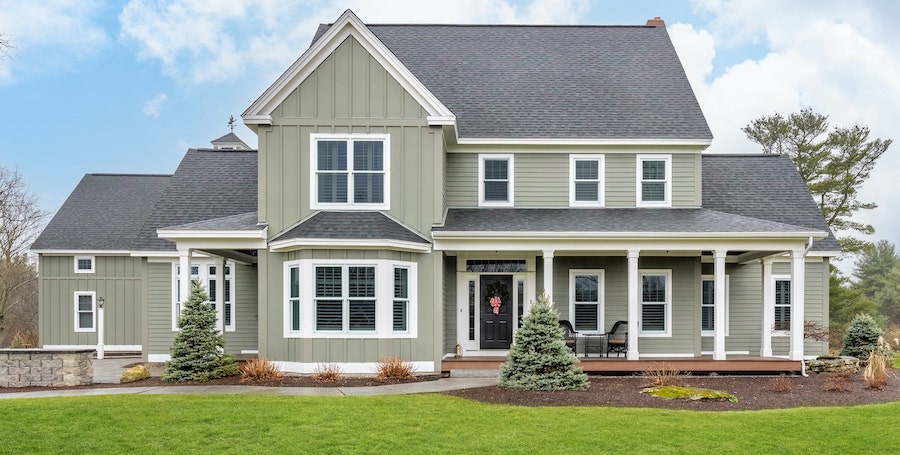
A successful siding project balances the look you want with your home’s architecture, maintenance expectations, and budget.
Start with the rooflines, windows, porches, and wall shapes. Board and batten can emphasize height, while lap siding can reinforce horizontal features.
Look at examples with proportions similar to your house. A treatment that works on a tall, narrow home may create a different effect on a wide ranch.
Raised battens can become a prominent design feature. Lap siding creates its own repeating pattern, with the strength of the lines influenced by exposure and profile.
Consider existing stonework, decorative trim, and roof complexity. Your siding should complement those details without making the exterior feel crowded.
Samples help you assess texture and color, but they cannot show the complete design.
Review the proposed batten spacing or course exposure across an elevation. Check how the pattern meets openings, corners, and roof intersections. This helps identify awkward narrow spaces before materials are installed.
Choose products that fit your maintenance preferences, then compare estimates with similar materials and finishes.
For Raleigh homeowners, product selection should also account for local conditions and appropriate installation requirements. Our guide to the best type of siding for Raleigh homes explores those considerations.
Board and batten can cost more than lap siding, especially when separate battens, additional trim, and detailed layout increase material or labor requirements. However, there is no fixed price difference between the styles.
The selected product, finish, wall area, home design, and installation scope all affect the total.
If you are asking, “Is vertical siding more expensive than horizontal?” the answer is: it can be, but orientation alone does not determine cost.
A vertical panel-and-batten system may require more components and installation steps than a straightforward lap installation. A manufactured profile with an integrated pattern has a different labor equation.
Likewise, premium horizontal siding can cost more than an economical vertical product. Compare specific systems installed on the same house.
Request clear descriptions of:
Siding area refers to exterior wall coverage, not interior floor area. Openings, wall geometry, and waste affect material quantities.
Our article on the cost to reside with HardiePlank provides additional budgeting context. Your project estimate should reflect your home’s actual conditions.
Using board and batten selectively may help you achieve the appearance you want while limiting its coverage.
However, transitions and accent areas can introduce additional work. Ask for separate estimates for all lap siding, all board and batten, and a combined design.
Board and batten offers distinctive vertical detail, while lap siding creates horizontal lines with a range of profiles and exposures. Either can work across your entire house or as part of a coordinated combination.
At Carolina Exteriors, we help Raleigh-area homeowners evaluate siding choices from design through installation. Explore our siding replacement services to request a consultation and discuss the right approach for your home.
Board and batten is one type of vertical siding. Its defining feature is the raised batten pattern. Other vertical products use grooves, channels, or different profiles without separate raised strips.
Material and finish usually matter more than orientation. Compare the cleaning, painting, inspection, and repair requirements of specific products. Both styles have joints, edges, or trim details that may need attention.
Yes. Lap siding can cover the main walls while board and batten highlights gables, entries, or other sections. Coordinated colors, consistent trim, and logical transitions help the combination feel cohesive.
No. It can also complement cottages and contemporary homes. Batten spacing, texture, color, and trim proportions influence whether the finished exterior feels rustic, traditional, or modern.
Do not assume the existing siding provides a suitable base. We recommend evaluating the wall condition and the new product’s installation requirements. Removal may be necessary to prepare the surface or address concealed damage.


Get a free, no obligation estimate.
Financing Available

Speak with one of our experience team members who can help you make the best decisions for your home. Give us a call at (984) 279-1776 or request a consultation below.
No obligation • Financing available

Carolina Exteriors is the Raleigh area’s most recommended and referred specialty replacement contracting company. Boasting an impressive 60% referral and repeat customer rate, we are the trusted professionals for James Hardie® HardiePlank siding, replacement windows, entry doors, roofing, and gutters.
© 2025 Carolina Exteriors. Sitemap Privacy Policy
Site by HipBip.co