Proper Hardieplank Siding Joint Flashing
April 17, 2026
A worn deck does not always need to be replaced. Faded boards, minor cracks, and loose fasteners can often be handled with maintenance or targeted repairs.
The bigger concern is deterioration that reaches the deck’s structural components. Understanding the difference between cosmetic wear and structural damage can help you decide whether repair, restoration, resurfacing, or replacement makes the most sense.
What matters most is not how old the deck looks, but how sound the structure is beneath the surface.
Use this quick comparison as a starting point:
| Deck Condition | Repair or Restoration May Make Sense When… | Replacement May Be Better When… |
| Damaged deck boards | Damage affects only a few boards | Deterioration is widespread or extends into framing |
| Loose railing | Hardware or railing components are the main problem | Supporting framing or guard posts are deteriorated |
| Joist damage | Damage is isolated to a limited area | Multiple joists are soft, split, sagging, or rotten |
| Ledger concerns | The issue can be corrected and surrounding material remains sound | The deck is separating from the house or significant decay is present |
| Moving posts or footings | One localized support can be corrected | Multiple supports are shifting, sinking, or leaning |
| Worn surface | Structural framing remains healthy | Both the surface and supporting structure are deteriorating |
| Frequent repairs | Problems remain minor and isolated | Several major components require ongoing repairs |
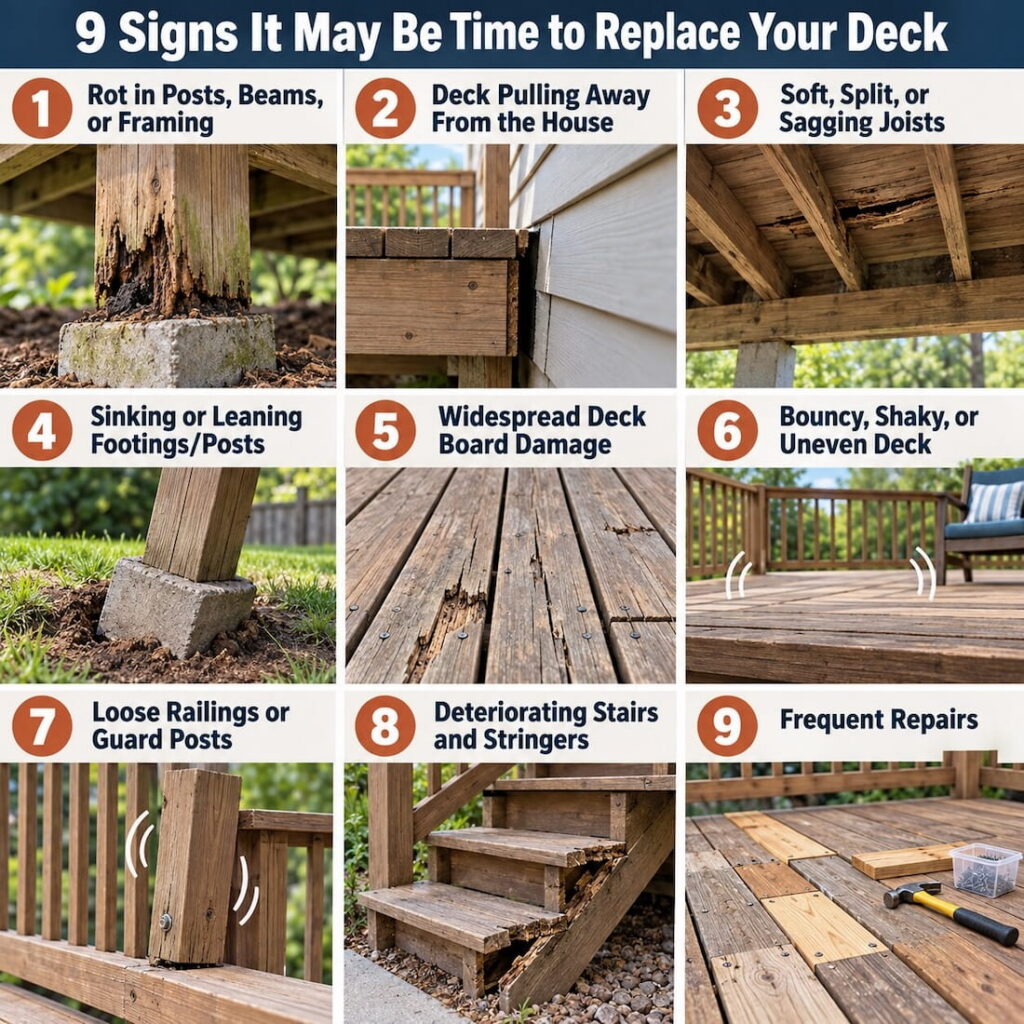
A professional evaluation is the best way to determine which category your deck falls into. Here are nine signs that deserve particular attention.
Replacing one damaged deck board is very different from repairing a deteriorated support post or beam.
Posts, beams, and framing components help carry the deck’s weight. Once significant rot reaches these areas, the problem is no longer just cosmetic.
Look for soft wood, dark discoloration, deep cracks, crumbling sections, or visible decay. Pay particular attention around post bases, connections, and places where water tends to collect.
One damaged component may sometimes be repairable. When deterioration affects multiple posts, beams, or framing sections, full replacement may provide better long-term value than a series of structural repairs.
Many attached decks rely on a ledger board to connect the structure to the home.
Warning signs around this connection can include:
Because some moisture damage can remain hidden behind exterior materials, ledger issues deserve prompt attention.
If the deck appears to be separating from the house, do not assume tightening a few fasteners will solve the problem. The connection and surrounding materials should be evaluated to determine whether repair is practical.
Joists support the deck surface, so damage here matters more than ordinary wear on a few boards.
Look for cracking, softness, sagging, visible rot, or deterioration near connections. One damaged joist may be repairable, but problems across several joists can make resurfacing a poor investment.
Before installing new decking, make sure the frame underneath still has enough useful life left to justify keeping it.
Leaning posts, uneven beams, or a section of deck that appears to be settling can point to movement at the foundation.
One isolated support issue may be correctable. If several footings or posts are shifting, replacement may be a better way to address the underlying problem and restore the deck’s stability.
A few cracked or warped boards are usually a maintenance issue. Widespread deterioration is different.
Watch for:
If the framing underneath is sound, resurfacing may be enough. If the joists, beams, or posts are deteriorating too, replacing only the surface may offer limited long-term value.
A noticeable change in how the deck feels underfoot deserves attention.
Movement can come from loose hardware, weakened connections, damaged joists, inadequate bracing, or shifting supports. It does not automatically mean the deck needs replacement, but the cause should be identified before additional repairs or cosmetic work are made.
If the deck already feels unstable, avoid jumping on it or shaking components to test its strength.
Loose railings are often repairable when the problem is limited to hardware or the railing system itself.
The bigger concern is damaged framing underneath. If guard posts are attached to rotten, cracked, or weakened wood, tightening fasteners may only provide a temporary fix. Pay particular attention around stairs, landings, and elevated edges.
Deck stairs can wear faster than the main surface because they combine frequent use with constant exposure to the weather.
Look for loose treads, damaged stringers, unstable handrails, settling at the bottom, or movement where the stairs connect to the deck.
If the problem is limited to the stair system, rebuilding the stairs may be enough. If stair damage appears alongside deteriorated joists, railings, or support posts, it may point to a larger deck restoration or replacement need.
Deck age can provide useful context, but it should not determine replacement by itself.
The pattern of repairs is often more revealing.
If you replace boards one year, repair stairs the next, and then discover railing, joist, or rot problems soon afterward, the deck may be experiencing broader deterioration rather than a series of isolated issues.
At that point, ask two questions:
How much of the original deck will remain after the necessary repairs?
How much useful life is left in those remaining components?
Repeatedly repairing an aging structure can eventually cost more without providing the benefits of a properly rebuilt deck.
Not every aging deck requires the same solution.
Repairs make sense when problems are localized and the main structure remains sound. Examples include replacing several boards, correcting a railing issue, or rebuilding a limited section of stairs.
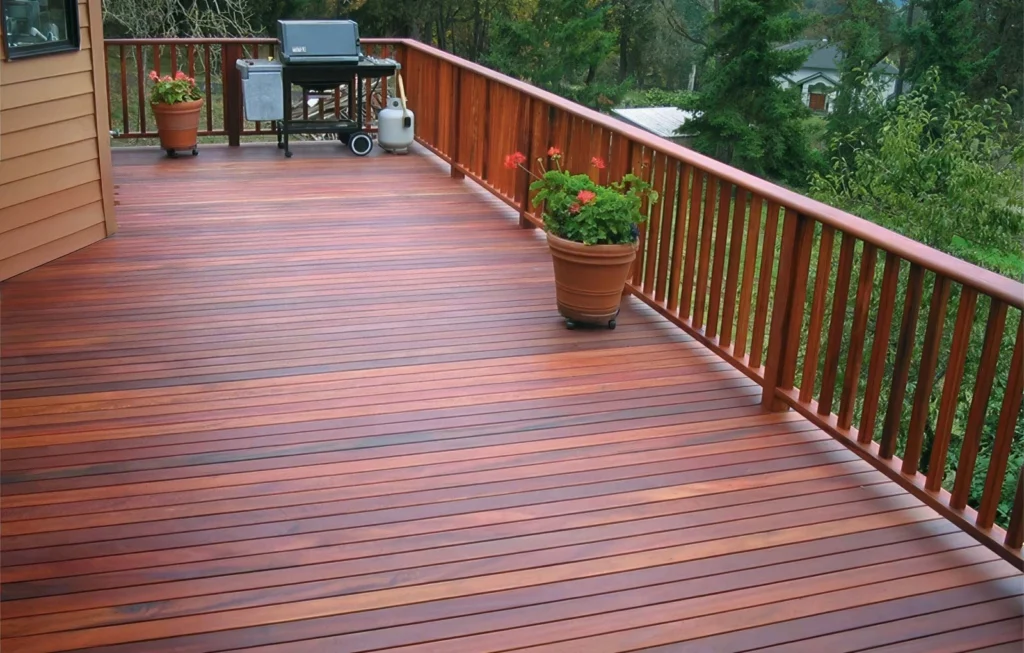
A structurally healthy wood deck with a worn appearance may benefit from cleaning, surface preparation, staining, sealing, or other restoration work.
This can refresh the deck and help protect the wood without rebuilding the structure.
If the deck boards have reached the end of their useful life but the framing remains structurally sound, the old surface may be removed and replaced while preserving much of the existing structure.
The framing should always be evaluated before investing in new decking.
Full replacement becomes more practical when deterioration affects several structural areas, foundation or ledger problems are extensive, or repairs would require rebuilding a large percentage of the deck anyway.
Replacement also creates an opportunity to rethink the deck’s layout, materials, stairs, railings, and overall design.
Some problems can wait for scheduled maintenance. Others deserve greater caution.
Consider limiting access until the deck can be evaluated if you notice:
If you are unsure whether an area is structurally compromised or simply worn, having it evaluated is safer than assuming the problem is cosmetic.
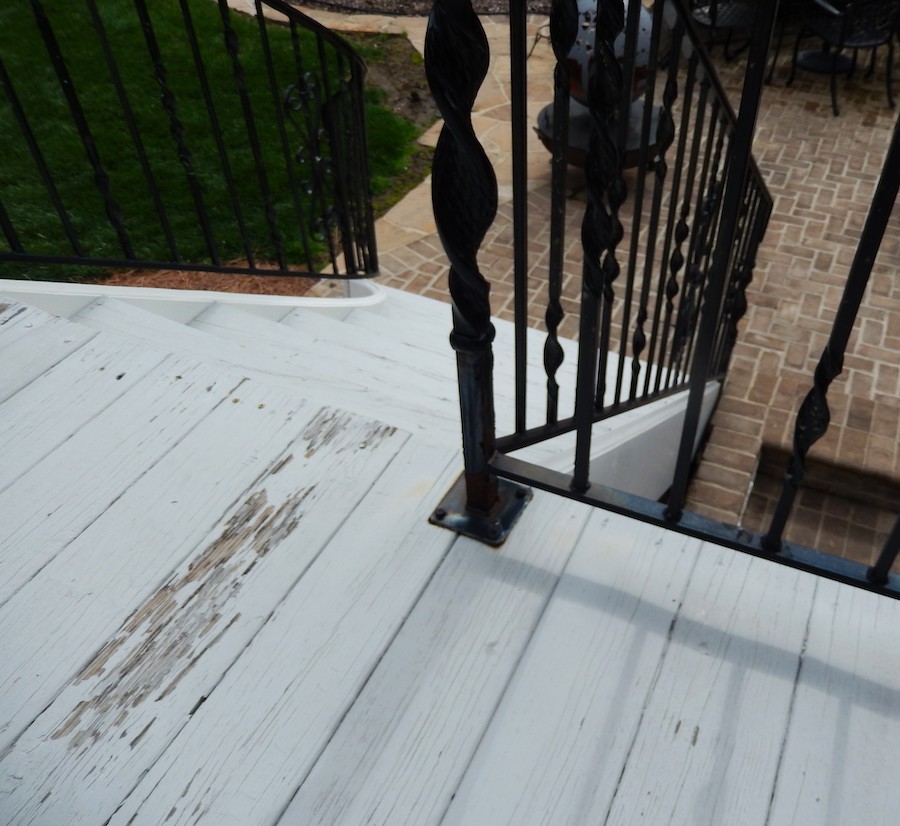
A useful deck assessment should examine more than the walking surface.
Important areas include:
The goal is to determine which components remain sound, which can reasonably be repaired, and whether the recommended work makes sense as a long-term investment.
A worn deck does not always need to be torn down, but cosmetic improvements cannot correct serious structural deterioration. The best decision starts with understanding what is happening below the surface.
Carolina Exteriors helps homeowners in Raleigh and throughout the Triangle evaluate aging decks and determine whether repair, restoration, resurfacing, or replacement is the right next step.
If your deck is showing signs of deterioration, schedule a consultation with Carolina Exteriors to explore the best solution for your home and outdoor space.
Soft or rotting posts, beams, joists, or other framing components can indicate structural deterioration rather than surface wear.
A visible gap can point to problems with the ledger connection, fasteners, flashing, or surrounding wood.
Yes. Leaning posts, uneven beams, or visible settling may indicate movement in the deck’s supports or foundation.
Widespread cracking, splitting, rot, warping, or frequent board replacement may indicate more extensive deterioration.
They can be. Ongoing problems with different parts of the deck may suggest broader deterioration rather than isolated damage.
Get a free, no obligation estimate.
Financing Available

Speak with one of our experience team members who can help you make the best decisions for your home. Give us a call at (984) 279-1776 or request a consultation below.
No obligation | Financing available

Carolina Exteriors is the Raleigh area’s most recommended and referred specialty replacement contracting company. Boasting an impressive 60% referral and repeat customer rate, we are the trusted professionals for James Hardie® HardiePlank siding, replacement windows, entry doors, roofing, and gutters.
© 2025 Carolina Exteriors. Sitemap Privacy Policy
Site by HipBip.co